Brumley Law Firm, a personal injury practice in Washington State, was growing but struggling to sustain that growth. Founder Joshua Brumley had a clear vision for the future of the firm, but without operational systems, structured leadership, and intentional culture-building, growth became difficult to sustain. Turnover was high, execution was inconsistent, and much of the firm’s direction lived inside Joshua’s head rather than inside documented processes.
Through Crisp Coach, Focus Retreats, Crisp Recruit, Crisp Experience, Social Stack, Streaming Stack, and Specialty Video, Brumley Law Firm built the infrastructure to match its ambition. Joshua and his team implemented systems for accountability, communication, hiring, and leadership development that turned instability into scalable momentum.
Growth in staff, caseload, and revenue
The firm’s increase in client referrals
The firm’s three-year growth rate


Firm NameBrumley Law Firm
Practice Area Personal Injury
LocationWashington State
How Crisp Helped Crisp Coach Crisp Social Stack Crisp Streaming Stack Crisp Recruit Crisp Focus Retreats Client Experience Optimization Specialty Video
Get StartedJoshua Brumley has always thought of himself as an advocate for underdogs.
Raised in Tacoma, Washington, he earned his undergraduate degree from the University of Washington, an MBA from Jacksonville University, and his law degree from Florida Coastal School of Law. Once he passed the bar in 2015, he began practicing criminal and family law, and then made a pivotal decision in 2021: he transitioned into personal injury and launched Brumley Law Firm’s singular focus on car accident cases.
The reason was personal. Joshua wanted to be, in his words, “the Robin Hood of the legal world,” helping everyday people stand up to insurance companies with the infrastructure, teams, and legal resources to minimize what injured claimants receive. His clients are often overwhelmed, unsure of their rights, and facing opponents with deep pockets and sophisticated playbooks. Joshua wanted to be the prepared professional on his clients’ side.
That conviction shaped every part of the firm’s identity. He built Brumley Law Firm to educate clients about their rights, communicate clearly at every stage of their case, and advocate aggressively on their behalf. As the firm’s mission statement puts it, he wanted “to empower the community by providing client-focused service, one car crash at a time.”
But passion alone could not solve the operational problems that came with growth. Joshua knew where he wanted the firm to go, but nobody else in the organization could follow the road map to get there. That’s because the map only existed in his head.
Tripled Staff, Caseload, and Revenue
After building stronger systems, implementing accountability structures, and aligning the team around a clearly communicated vision, Brumley Law Firm achieved threefold growth across staff, caseload, and revenue. That growth was powered by a scalable foundation rather than simply working harder without direction.
Earned Inc. 5000 Recognition with a 723% Growth Rate
Brumley Law Firm was named to the Inc. 5000 list with a 723% three-year growth rate, ranking #573 nationwide, #12 in the legal industry, #7 in Washington, and #6 in the Seattle-Tacoma-Bellevue metro area. The recognition placed the firm among the fastest-growing companies in the country.
Increased Client Referrals by More Than 60%
By standardizing communication, improving responsiveness, and creating a more consistent client experience from intake through resolution, Brumley Law Firm saw client referrals increase more than 60%. Joshua attributes that growth directly to trust.
“When clients have a positive experience, when communication is clear, expectations are managed, and they feel genuinely supported, they naturally share that experience with others,” he explained.
Built a Stable, Mission-Driven Team
The firm moved from a cycle of constant turnover and reactive hiring to an intentional culture grounded in clearly defined core values, structured onboarding, regular communication rhythms, performance expectations, and leadership pathways. Retention became a natural outcome of the environment rather than a problem to manage.
Expanded Beyond the Firm
The firm’s operational stability also created the capacity for Joshua to pursue ventures that support and extend his long-term vision: Brumley Commercial Properties LLC, the publication of his book “Protect Your Neck,” the launch of the Iron Mind Podcast, and the development of AI-powered case management software called AlphaLaw.io.
Joshua says AlphaLaw.io was developed to help the firm improve efficiency, increase operational visibility, and create more consistency across case management. The platform helps the team track key metrics, monitor case progress, and identify missing records, deadlines, and next steps more effectively.
Before implementing the system, the firm struggled with operational inefficiencies, overlooked details, and inconsistent workflows that affected case progression. Joshua says building AlphaLaw.io helped the team create more structure internally so they could focus more consistently on client outcomes.
“For me, all those ventures are connected by one core idea: impact,” Joshua said. “Legacy isn’t just about what we build today. It’s about what continues to create value and help people well into the future.”

If you’re done playing small, we’re ready to help. Get in touch with us and take the first step towards unlocking your firm’s full potential.
Before implementing what he learned through Crisp, Joshua says the biggest obstacles centered around leadership, culture, and operational structure.
“I had a clear vision for where I wanted the firm to go, but that vision largely lived in my head and wasn’t translated into systems or processes that the team could consistently follow,” he recalled.

Without documented processes or repeatable frameworks, execution varied widely depending on the individual team member. Everyone was working hard, but the lack of alignment meant that effort did not always translate into consistent results for clients or predictable outcomes for the business.
Turnover made the problem worse. Joshua invested significant time, energy, and money into hiring and training people, only to watch them leave because the firm lacked the structure, clarity, and defined growth paths that talented team members need.
“It creates a cycle where you’re constantly rebuilding instead of building forward,” he said.
As the owner, the instability landed squarely on his shoulders. Every departure meant stepping in to fill gaps, retraining new hires, and losing the momentum that comes with continuity.
The financial and operational consequences compounded over time. Without clear accountability, too much depended on individual staff members remembering what to do rather than following a documented, repeatable process. That inconsistency led to missed opportunities, burnout, a ceiling on growth, and a client experience that was difficult to standardize.
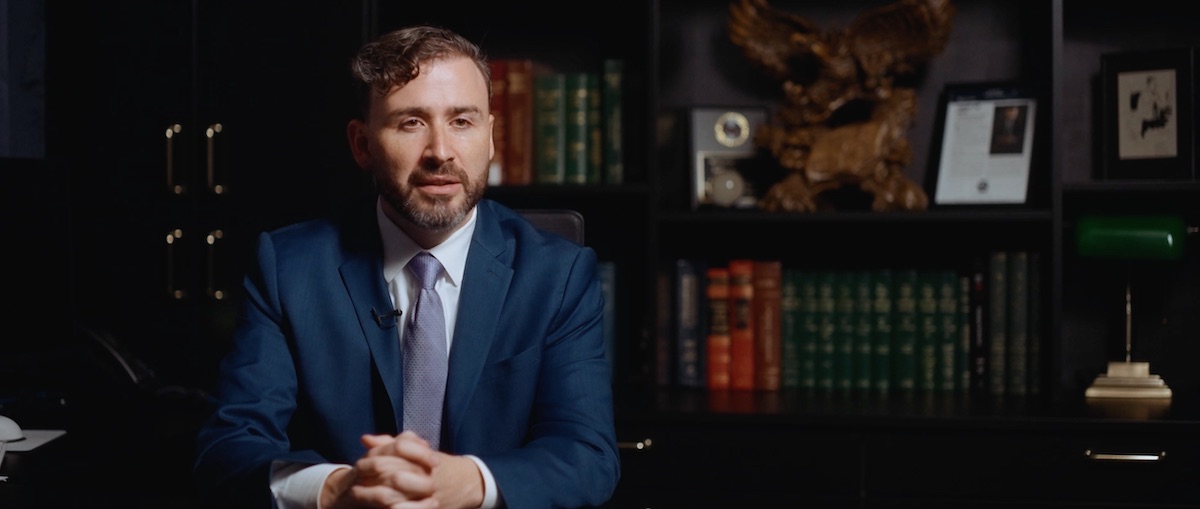
There was also a leadership challenge that Joshua had to confront honestly. In a 2024 video, he reflected on his early approach to management: “As I became a boss, I was going to be the nicest boss. I was going to be just kind to everyone. Oh, you need a day off? Absolutely. Whatever you need.”
While that approach attracted dedicated people initially, the lack of clear boundaries and accountability standards eventually left him vulnerable.
“I think, eventually, I was taken advantage of,” he admitted.
Making Culture an Intentional System
One of the most significant shifts at Brumley Law Firm happened when Joshua began deliberately building the firm’s culture. The firm defined its core values and then embedded those values into how it hires, trains, evaluates, and rewards team members.
Crisp Coach, a business coaching program that pairs law firm owners with experienced coaches for ongoing strategic guidance, provided Joshua with frameworks to make this shift. His coach helped him see that culture was not a vague feeling but an operational system that needed the same rigor as case management or client intake.

The team implemented structured onboarding for every new hire, established regular communication rhythms across the organization, set clear performance expectations for each role, and created recognition systems. Leadership pathways also gave team members visibility into how they could grow within the firm, which reduced the lack of advancement that previously contributed to turnover.
Those changes created stronger alignment. People understood what was expected, felt connected to the mission, and had clear reasons to stay and develop. Retention shifted from being a constant problem to a natural outcome of the environment.
Gaining Visibility Through KPIs and Accountability
Before working with Crisp, the firm had no structured way to measure performance. The team made decisions based on assumptions rather than data, and there was no reliable method to identify where the business was excelling or where it was falling short.
Implementing Key Performance Indicators (KPIs) for each role gave Joshua and his leadership team real visibility into the firm’s operations. By tracking KPI data specific to each case and each team member, they could ensure that caseloads were appropriately distributed, that no one was overextended, and that clients received the attention their cases required.
“I cannot stress enough how much implementing KPIs have been to our firm,” Joshua said. “If I … received this knowledge and nothing else from Crisp, it would all have been worth it.”
KPIs also gave the firm a framework for accountability. High performers received well-deserved recognition. Underperformers got the coaching they needed, and when coaching did not produce results, the firm was able to make difficult personnel decisions with confidence rather than guesswork.

Creating a Consistent, Trust-Building Client Experience
Joshua identified communication as the most impactful area for improvement. His goal was straightforward: clients should always know what is happening with their case, what to expect next, and how to reach someone quickly when they have questions.
The firm improved its intake process, follow-up protocols, and overall responsiveness. It also implemented client surveys to gather real-time feedback on how clients experienced the firm at each stage of their case. Instead of relying on assumptions, the team has visibility into where the experience was strong and where it needed refinement.
The investment in Crisp Experience, a program designed to help law firms create a systematized client journey that builds trust and generates referrals, provided frameworks for making these improvements consistent and scalable.
That consistency removed the uncertainty that erodes trust. Clients who feel informed, supported, and respected share those experiences, and Brumley Law Firm’s referrals increased by more than 60% as a direct result.
“Referrals reflect how people feel about your service,” Joshua said. “Once we standardized the client experience across the firm and delivered that level of consistency, referrals became a natural byproduct rather than something we had to actively chase.”
Building a Scalable Hiring Engine
As the firm grew, it needed a more reliable way to identify and onboard the right people. Crisp Recruit — a service that helps law firms attract, vet, and hire qualified candidates — became a critical part of that infrastructure. Joshua and the team used Crisp Recruit to fill key roles including case managers, a litigation paralegal, and other support positions.
Joshua also restructured the firm internally, dividing the team into micro-departments with qualified leaders for each one. He also separated the pre-litigation and litigation teams to clearly define responsibilities. He introduced a 30/60/90 day review process for new hires, a structured evaluation that checks in on performance, alignment, and development at set intervals during the first three months. These new processes proved to new team members that their growth mattered and that the firm was invested in their success.
Evolving from Operator to Leader
In the firm’s early days, Joshua was involved in nearly every decision and detail. That approach worked when the team was small, but as the firm expanded, it became a bottleneck.
Crisp Focus Retreats, dedicated strategic planning sessions held away from the office where law firm owners work with their coaches to set quarterly and long-term goals, gave Joshua the space to step back from daily operations and think about the business at a higher level. His coaching relationship provided an outside perspective that helped him identify blind spots and hold himself accountable for the changes he committed to making.
“It’s less about doing and more about enabling others to succeed,” Joshua reflected on his leadership evolution.

That shift allowed him to focus on strategy, vision, and developing the next layer of leaders within the firm rather than personally carrying every operational responsibility. And his peers have taken notice. Joshua was recognized as a Super Lawyers Rising Star in 2020-2023.
Today, Brumley Law Firm operates with an admirable level of clarity and operational maturity. The business no longer depends on Joshua personally managing every detail. Instead, it runs on documented systems, clear accountability structures, and empowered leaders throughout the organization.
But the growth itself was never the goal. The firm’s leader wanted to build something strong enough to sustain the mission that started it all: making sure everyday people have someone in their corner who is prepared, strategic, and genuinely invested in their outcome. Now, the firm has the systems, the team, and the leadership structure to deliver on that promise at scale.


If your law firm faces similar challenges, let’s talk. We’ll help you take the first step towards transformational growth.
"Crisp Coach has exceeded all of my expectations. The people that I’ve met there and the things that I’ve learned have gone far beyond anything I would’ve imagined. It’s one of the best decisions I’ve ever made."

Alexander Shunnarah Trial Attorneys
Alexander Shunnarah


"Crisp holds me accountable. I see other successful law firm owners who are just as busy or busier than me finding time to improve their firms which motivates me to push harder."

Craig, Kelley & Faultless LLC
David W. Craig




"We needed a scalable marketing source that fit our brand, and Crisp was scalable. Working with a partner that has the same goals and aspirations as you and understands the importance of growth is critical, and Crisp has that."

Berry Law Firm
John S. Berry



"Since partnering with Crisp, our revenue has tripled, our processes have been cemented, and our training and team development have evolved into a state that was once unimaginable."

Amaro Law Firm
James Amaro



"Now we don’t simply talk about a growth mindset — we have ways to evaluate it. We developed a clearer vision that is now communicated to the firm regularly. And we have developed relationships as owners with other successful law firm owners; these relationships have been invaluable."

Chaffin Luhana
Eric Chaffin


"Every aspect of our organization has been impacted through the partnership. I consider Crisp a true partner with a totally shared value system, vision, and commitment to our success."

TorkLaw
Reza Torkzadeh