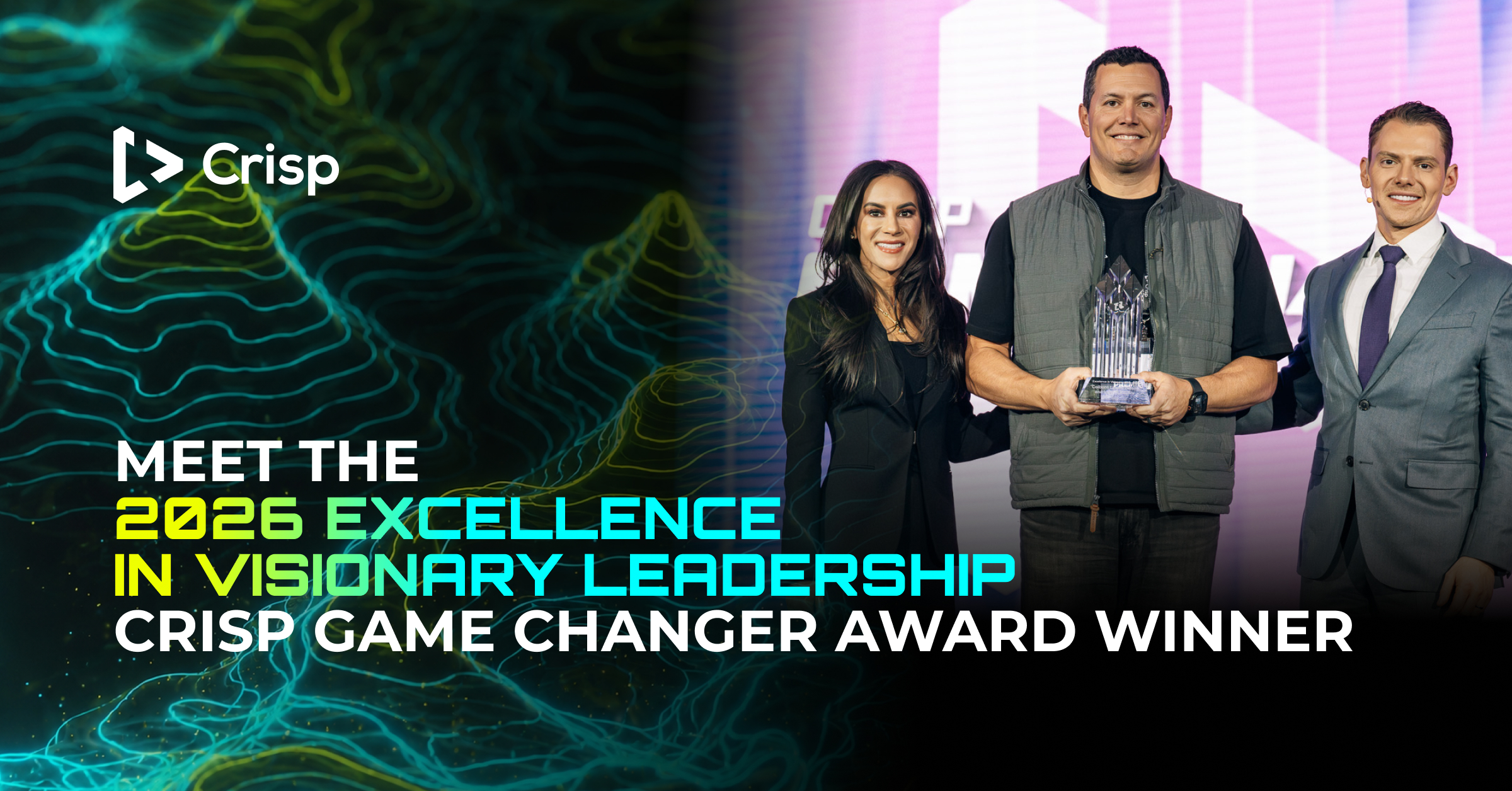
The 2026 Game Changers Summit brought together the most committed law firm owners in the country for two days of elite-level strategy, celebration, and recognition.
In addition to the Firm of the Year Awards at each level (ELITE, PREMIER, SELECT, and CrispX), Michael and Jessica Mogill also presented the Excellence Awards, which recognize firms that stood out in one of the four pillars that define what it means to be a true Game Changer: Visionary Leadership, Client Experience, Community Impact, and Firm Culture. These awards honor firms whose commitment to a single pillar has been nothing short of extraordinary.
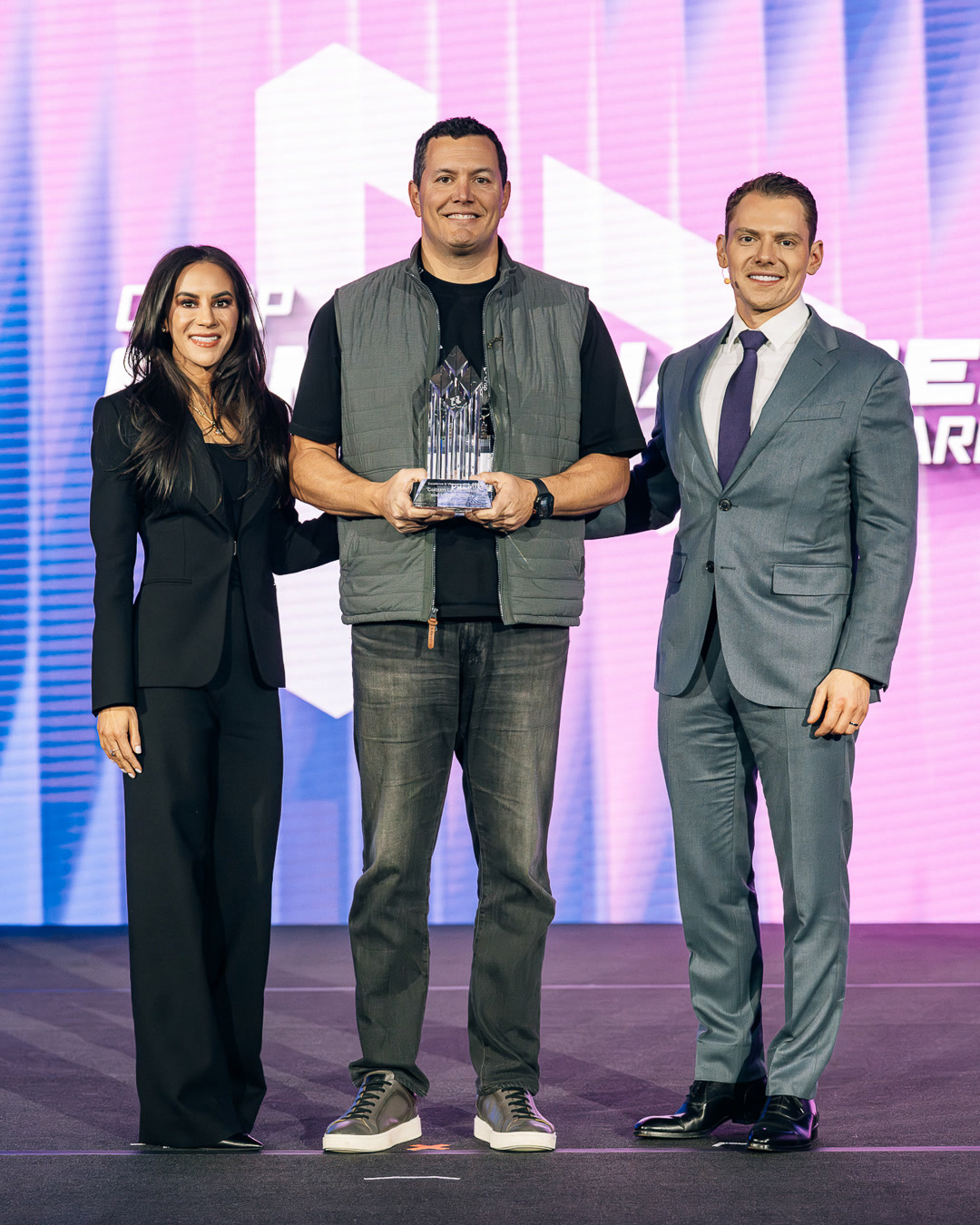
Congratulations to Greg Colburn of Colburn Law for winning the prestigious Excellence in Visionary Leadership Award!
Meet Greg Colburn
Greg Colburn’s path to personal injury law didn’t follow a straight line. It actually started because of a rooftop.
After his last year at the University of Washington, where he was on scholarship and planned to play minor league baseball, Greg took a construction job. He fell off a roof and suffered injuries severe enough to put him in a wheelchair for two years.
“I went from a Division One scholarship student-athlete one day to the same guy, but in a wheelchair, with a whole storm of uncertainty around me,” Greg said. “The reality is that all the inner confidence I had now, the foundation that was built on, seemed to shift beneath me.”
The hospital where he was treated couldn’t even give him a wheelchair. They handed him crutches and discharged him. Back at his college house in Seattle, with hardwood floors and hallways too narrow for mobility equipment, Greg improvised. He grabbed a flat furniture dolly from the garage, had his roommate staple a piece of carpet pad on top, and wheeled himself around on his knees.
More than 80 lawyers in Seattle, Bellevue, Everett, and Renton declined his case. So, Greg worked it himself and settled for $1 million two months before trial. The struggles he endured with his injuries, navigating the complex workers’ compensation system, and communicating with lawyers in general changed his career trajectory to law school.
Today, outside his office door at Colburn Law Accident & Injury Lawyers in Seattle, there is a framed reminder of that experience: the surgical pins from both of his feet, mounted around his settlement check.
“It reminds me of what grit and holding yourself accountable can accomplish,” Greg said, “and why I do what I do.”
That lived experience is now embedded in how the firm operates. One of Colburn Law’s core values is empathy, and it shows up as early as the hiring process. Interviewers ask candidates about a time they faced adversity or an experience that helps them empathize with someone who has suffered a traumatic brain injury or the loss of a loved one. The ability to put themselves in their clients’ shoes will help them more effectively defend their case.
“Most of the people that are calling our firm are in this storm of uncertainty after they got hurt,” Greg said. “And that’s the worst part. That is by far and away the worst part about being injured.”

Visionary Leadership at Colburn Law
Before Crisp, Greg’s leadership style was defined by a phrase he now laughs about: “Screw it, I’ll do it.”
He had built his firm from the ground up as a solo practitioner, and his default position was to take ownership of every task, every intake call, and every case decision. He expected everyone else to operate the same way.
“Prior to Crisp, although I believed I was giving ownership to each team member, I was still overseeing everything they were doing and really forming a bottleneck,” Greg said.
The result was a firm that did good work but wasn’t performing to its full potential. Team members didn’t seem fulfilled. And Greg was paying a personal cost due to this approach: He was more than 120 pounds overweight, physically unhealthy, and leaving little time in the day for his wife, Lauren, or their two children.
Two realizations propelled him to change the way his firm operated. First, Greg looked around his office and recognized that his team was capable of more. Second, he shot some marketing videos and did not recognize the man on screen.
“I looked at the guy on the screen and I thought to myself, who the hell is that guy?” Greg said. “Because I was 120-plus pounds heavier than I should have been, and there was no way in the world I wanted those videos going out onto the web.”
The shift happened quickly after joining Crisp. Greg describes a roughly month-long period that combined a coaching call with Aaron, his Crisp coach, followed by his first workshop, and then the five-hour flight back to Seattle.
“Going through the days, the sheets, the questions, having to identify what is the hurdle, what are the potential solutions, what is the action plan, who’s going to do that, when is that going to happen,” Greg recalls. “I spent the whole flight back going through the worksheet and actually thinking to myself, you know, we can do this.”
His athletic background gave him a framework that finally clicked. In baseball, there were always coaches, skill-specific training, and stats to guide him. At his firm, he had almost none of that. He knew how much their case settled for and how many clients they signed per month, but that was really it.
So Greg built the infrastructure. He established standard operating procedures and key performance indicators (KPIs). He created a team scorecard. He hired the firm’s first non-legal team member to run operations, and he implemented weekly huddles where the team uses metrics not to punish, but to celebrate wins.
“The look historically on paralegals’ and legal assistants’ faces when you talk about instituting KPIs is one of dread,” Greg said. “I went into establishing SOPs and KPIs with a conscious mindset of, yes, we’re going to learn from these, but I want them primarily to be used to celebrate team accomplishments and to establish goals going forward.”
One of the most significant leadership changes came from Greg learning to let go. He gave his associate attorneys settlement authority up to $100,000, meaning they could resolve cases without coming to him for approval. He removed himself from the intake bottleneck by enabling his operations team to handle potential clients directly.

“The look on an associate attorney’s face when they settle a case and they didn’t need me to hold their hand is truly fulfilling,” Greg said. “That’s where, as a coach, I feel like I accomplished something. It’s not because I did it, it’s because I enabled that person to do it.”
The results speak for themselves. In the past year, Colburn Law’s revenue has grown more than 67%. The firm’s profit margin exceeds the benchmarks set at Crisp’s financial mastery workshop, giving Greg the ability to reinvest in recruiting, marketing, and growth.
“Our revenue growth is a direct reflection of the implementation of SOPs and KPIs,” Greg said. “I would love to say it’s all me, but that’s not true.”
Additional validation that the firm was headed in a better direction came from an unexpected place: his own team voted him Employee of the Quarter.
“And not just because my name’s on the door, apparently,” Greg said. “Literally, the reason that was given for Q2 was I’m not a bottleneck anymore.”

Colburn Law Today
Greg Colburn’s transformation extends well beyond the firm’s balance sheet.
He has lost more than 120 pounds and can now physically keep up with his children while mountain biking, running, and hiking. He coaches his son’s baseball teams. And the family travels internationally, with trips to Ireland, Anguilla, and Belize planned across the year. And through all these activities, Greg is fully present rather than sitting on a laptop in a hotel room.
“The intangible value is that I’m just calmer,” Greg said. “When I look back at how life was a couple of years ago before Crisp, I don’t really recognize who that person was.”
The financial stability has opened up possibilities the family once only dreamed about. In 2025, they completed a full backyard remodel. This year, they’re on track to pay off their house. Their next goal is to buy a second home on San Juan Island.
“It’s no longer a dream,” Greg said. “This is an actual goal that we’re taking steps toward.”
Inside the firm, the leadership team now proactively drives growth rather than waiting for direction. Team leaders come to Greg with opportunities for new office locations, marketing ideas, and properties for expansion. Colburn Law already operates multiple offices across the Puget Sound region, including Seattle, Issaquah, and Bellevue, and is actively exploring further expansion into new locations and practice areas.
“It’s not just me pushing that,” Greg says. “It’s the team leaders coming to me saying, hey, there’s this opportunity in this area, we’re ready to do it. They’re sending me properties, marketing ideas. They’re pushing me. It’s not me pushing them.”
When asked what he would tell another law firm owner that’s stuck in its old way of leading and afraid to change, Greg doesn’t offer platitudes. Instead, he echoes the question his coaching experience taught him to ask.
“The real question is: ‘What are you willing to do or not do to achieve the goals that you say that you actually want?'” Greg said. “Prior to Crisp, all I was doing was asking myself the question, what do I want? After Crisp, that changed to what am I willing to do or not do?”
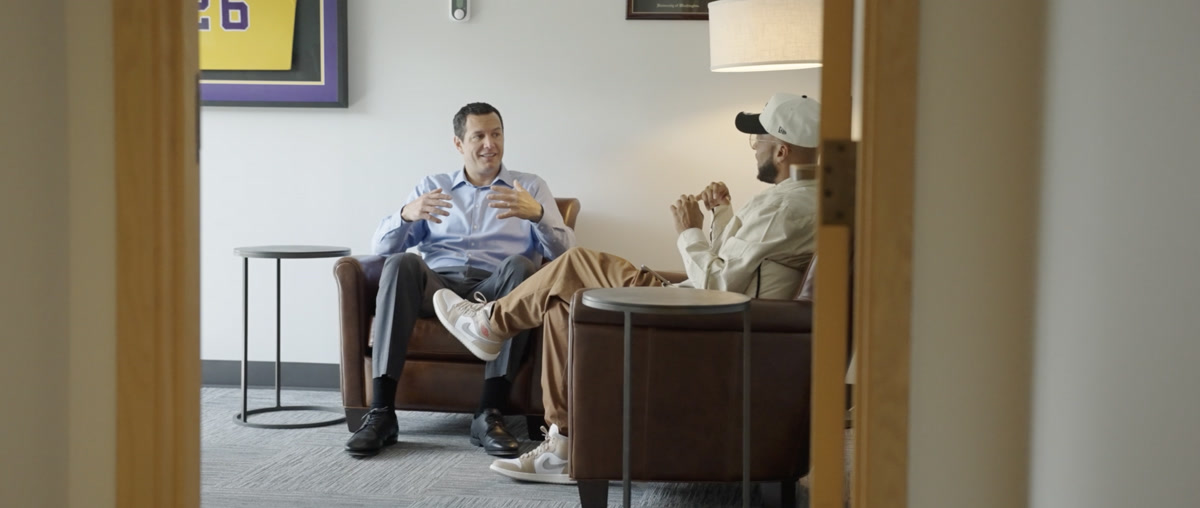
His wife Lauren may have summed it up best. For years after his accident, Greg would tell people it was the worst thing that ever happened to him. One night, after they had their son and were at a party, he said it again. On the drive home, Lauren let him know he should never say that again.
“If I don’t get hurt, her and I never meet,” Greg explained. “We don’t get married, we don’t have our son. We don’t have this life that we have, and I don’t have the career that I have.”
Congratulations to Greg Colburn and the entire Colburn Law team on this well-deserved recognition.