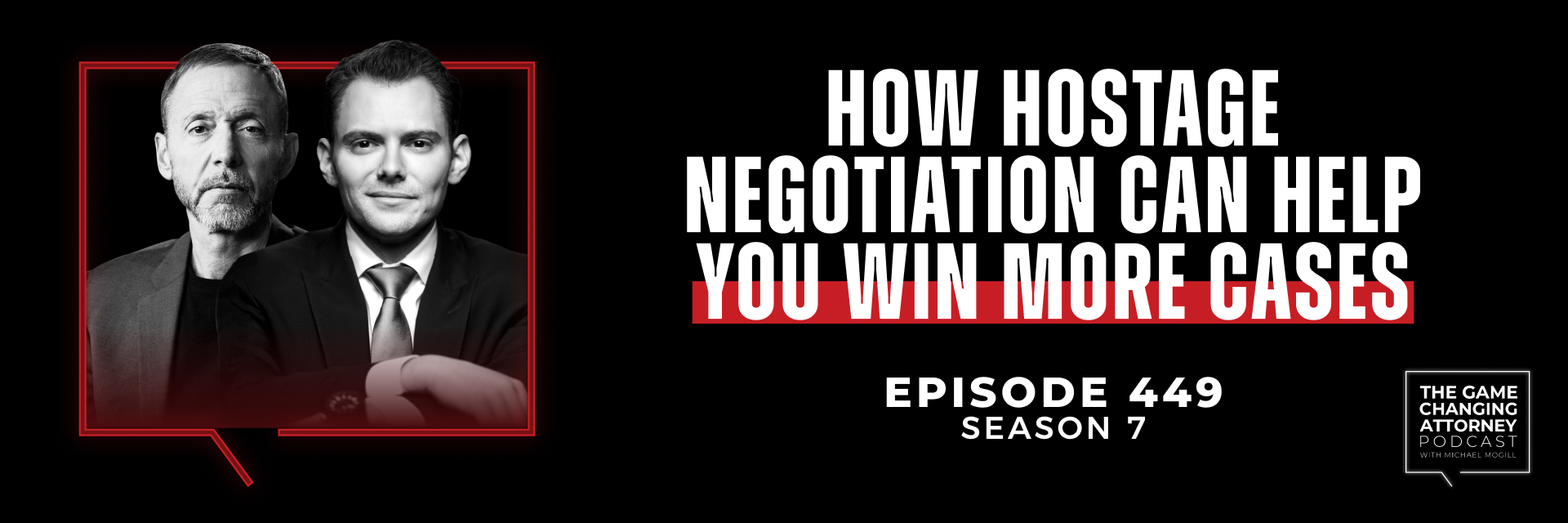
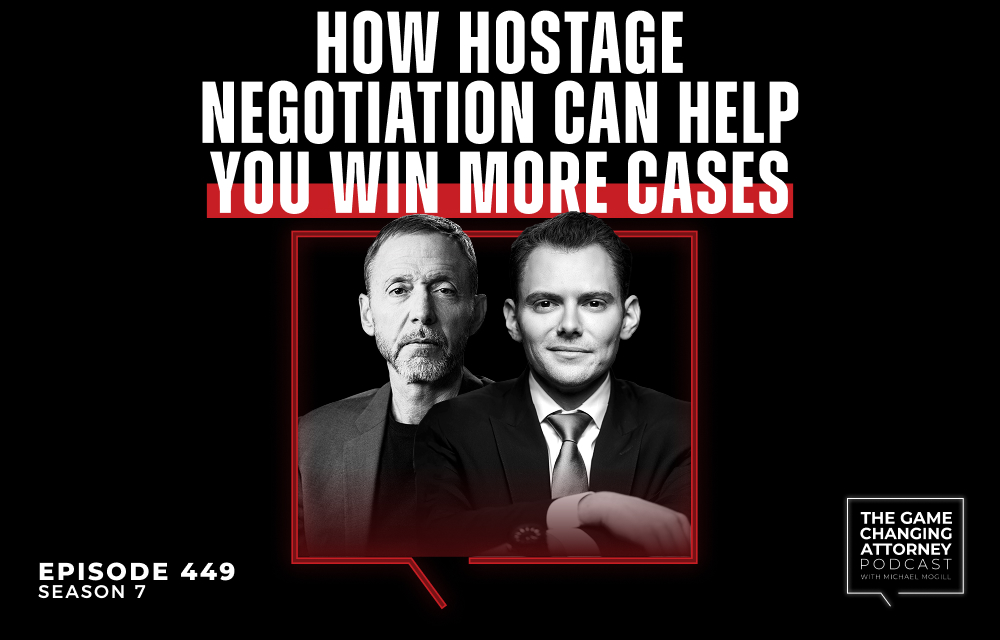
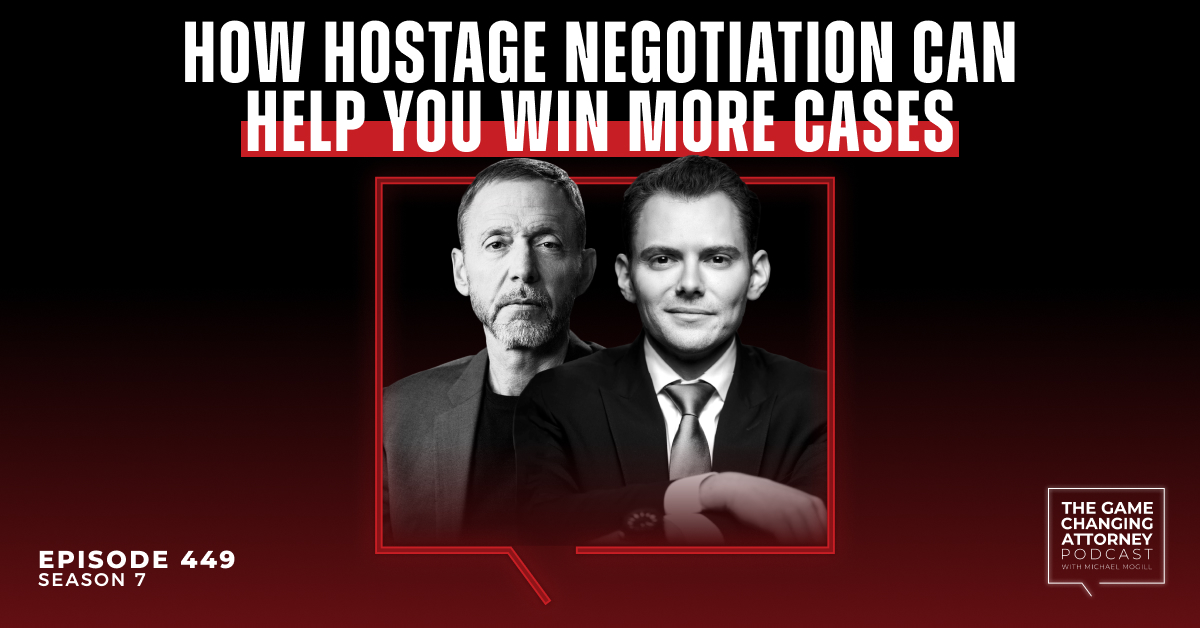
Episode 449 — How Hostage Negotiation Can Help You Win More Cases with Chris Voss
Most negotiators spend years perfecting their argument. Chris Voss spent his career learning how to make the other side feel heard.
In this encore episode of The Game Changing Attorney Podcast, Michael Mogill sits down with Chris Voss, former FBI lead international kidnapping negotiator, CEO of The Black Swan Group, and bestselling author of Never Split the Difference. With decades of high-stakes experience negotiating with criminals, terrorists, and executives alike, Chris challenges what most attorneys think they know about winning and explains why the collaborative negotiator almost always beats the combative one.
Here’s what you’ll learn:
- Why “win-win” is one of the clearest signals that someone is about to take advantage of you
- Why pushing back only when it’s justified builds more credibility than fighting every point
- Why negotiation is a perishable skill and what small-stakes daily practice actually looks like for someone who does this at the highest level
Getting better at negotiation doesn’t start with your next big case. It starts with the next conversation you have.
Listen & Subscribe
Show Notes:
People tend to fixate on first impressions, but Chris argues the last one is what carries forward. “The only thing about a first impression you got to worry about is that you make a bad first impression, because then that becomes your last impression.”
Aggression is contagious, and it works against you. “If I approach you being combative, there’s going to be a neurochemical change that’s going to cause you to be combative in return.”
The lawyer who never argued his way through a deal made partner faster than anyone else at his firm. “Being highly collaborative and not fighting every negotiation, he made more money than any other associate did, and he made partner faster than anybody else in his firm ever did.”
Winning consistently takes a level of self-examination that most people only apply to their losses. “That’s the problem with winning. You don’t put that sort of introspective on the win when you should, but you don’t.”
The gap between competitive and ambitious is wider than most people realize. “When you’re competitive, you measure yourself against your competition. When you’re ambitious, you measure yourself against yourself, and you’re always looking to get better.”
Connect with Michael
- Text directly at 404-531-7691